




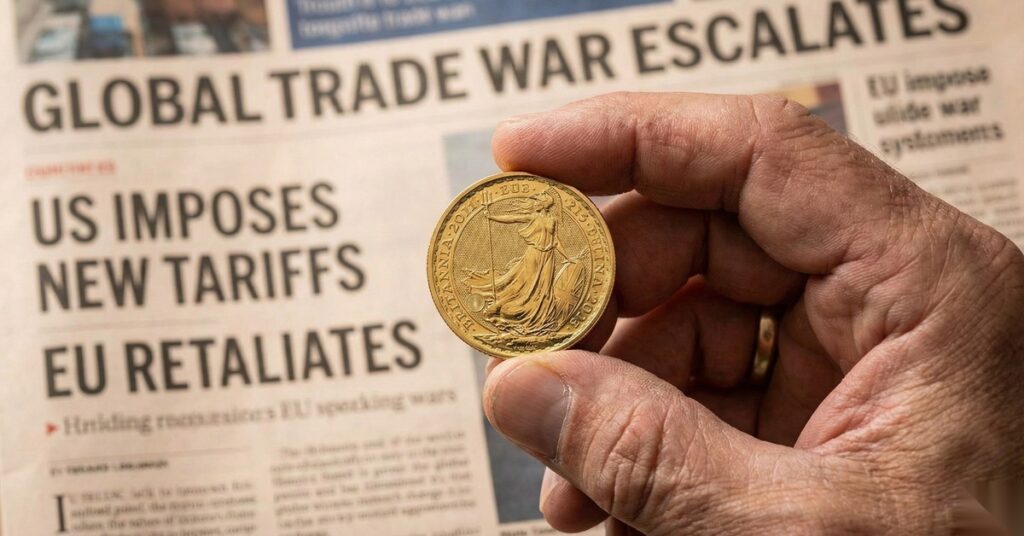
Gold, geopolitics and President Trump have become tightly intertwined in 2026, turning every tariff headline or Fed-related rumour into a driver of bullion prices. For UK investors and sellers, understanding how these political shocks feed into the gold and silver markets can help turn volatility into opportunity rather than anxiety.
How Trump’s tariff shocks hit gold and silver
Since January, President Trump’s renewed tariff agenda has repeatedly jolted precious metals, with safehaven buying sending gold and silver to fresh record and nearrecord highs. Aggressive threats to impose sweeping levies on NATO allies and a new 10% global import surcharge, alongside sudden threats to hike it to 15%, have stoked fears of a prolonged trade war, weaker global growth and higher inflation. In practice, that cocktail has pushed gold to levels above 5,000 USD per ounce and driven silver into the 80–90 USD range, as investors rush to hedge both currency and policy risk.
Markets have also discovered how sensitive prices are to even small policy shifts. When the administration briefly stepped back from direct tariffs on critical mineral imports, silver saw an immediate doubledigit plunge before recovering, underscoring just how quickly sentiment can swing. For UK buyers, these shocks filter through into sterlingdenominated prices, which reflect both global bullion moves and how the pound trades against the dollar during each flareup.
Safehaven demand in a tense world
Tariffs rarely stay “just” economic; they tend to bleed into geopolitics, amplifying the appeal of precious metals. In 2026, tariff battles with Europe and tensions over territories such as Greenland have coincided with a deteriorating diplomatic backdrop in the Middle East and strained relations with Iran. Each time headlines point to stalled talks or military posturing, traders rebuild a “geopolitical risk premium” into gold and silver, bidding up prices as insurance against worstcase scenarios.
At the same time, policy uncertainty around trade has contributed to bouts of dollar weakness, another tailwind for bullion. When the dollar slips on fears of chaotic trade policy or growth shocks, international investors often rotate further into metals, reinforcing upward moves that began as purely political reactions.
The Fed, independence fears and monetary risk
Overlaying the tariff story is an equally important one: concern about the future independence of the US Federal Reserve. President Trump’s efforts to reshape the Fed’s leadership and push for lower rates have fuelled worries that monetary policy could become more politicised, undermining confidence in the central bank’s inflationfighting credibility. Markets know that if investors doubt the Fed’s resolve, inflation expectations can become unanchored, making hard assets like gold significantly more attractive as longterm hedges.
Recent debates over the dismissal protections for Fed officials and the upcoming choice of a new chair have highlighted just how fragile that confidence can be. Even without immediate policy changes, the mere possibility that future decisions might prioritise political goals over economic fundamentals is enough to keep a structural floor under bullion demand.
When the geopolitical premium builds — and when it fades
The “geopolitical premium” in gold and silver is not permanent; it can inflate and deflate quickly as news flow shifts. Earlier in February, for example, improved sentiment around negotiations with Iran triggered a sharp correction, with gold futures dropping more than 20% from recent peaks and silver falling nearly 50% in just over a week. As optimism rose that diplomacy might avert a serious escalation, some of the crisisdriven safehaven demand evaporated, dragging prices lower even though underlying structural drivers remained in place.
For disciplined investors, these episodes of fading fear can create attractive entry points. When panic subsides and prices retrace, yet tariffs, Fed uncertainty and longterm fiscal concerns remain unresolved, the longterm case for holding a core allocation to bullion may be stronger than the shortterm headlines suggest. In that sense, the very volatility generated by politics can be used to gradually build or rebalance positions rather than to chase spikes.
What this means for Gerrards Bullion customers
For UK buyers and sellers, the key lesson is that geopolitics and President Trump’s policies now sit alongside inflation and interest rates as primary drivers of gold and silver. Sudden tariff announcements, legal rulings on presidential powers and speculation about the Fed can all trigger rapid moves in bullion and in the pound, shaping the prices you see on screen. Rather than trying to predict each headline, many investors are choosing to set longterm allocation targets and use sharp dips or surges to rebalance, trim or add to holdings in a measured way.
Gerrards Bullion can help customers navigate this environment by providing uptodate pricing, market commentary and a wide choice of physical gold and silver coins and bars for those looking to diversify beyond purely financial assets. Whether you are responding to the latest tariff shock or quietly building a strategic allocation, the underlying rationale remains the same: in a world where politics and policy can change overnight, holding a portion of your wealth in tangible precious metals can offer resilience when it is needed most.
