




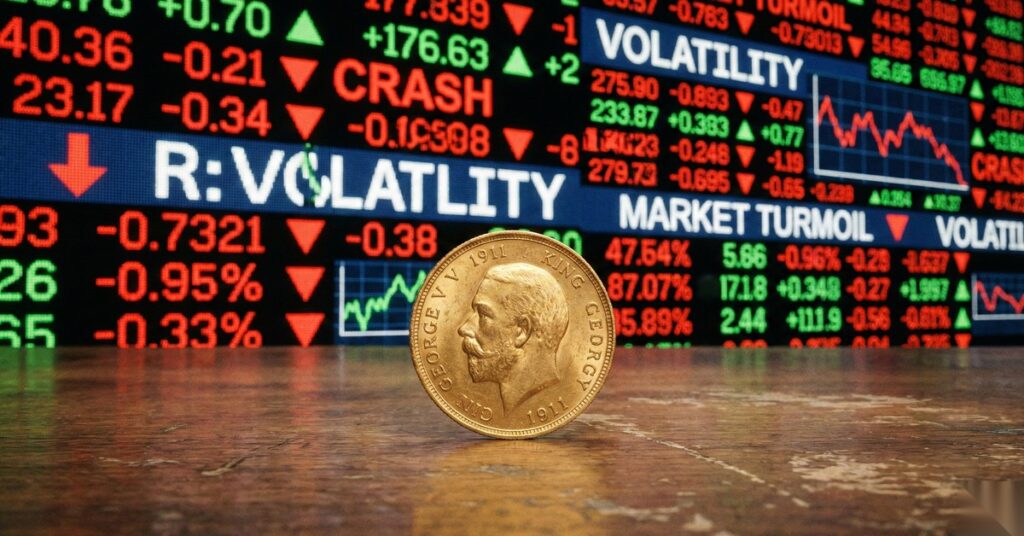
Gold and silver have given investors a wild ride over the past few weeks. After surging to record highs, both metals have suffered a sharp and sudden correction, leaving many people asking the same question: what on earth just happened, and what should I do now as a physical bullion buyer.
Why this move matters for bullion buyers
In this article, we will unpack the recent moves in the precious metals market in plain English, explain why prices can fall so quickly after making new highs, and set out what this means in practical terms for anyone buying or holding physical gold and silver in 2026.
How gold and silver reached record highs
Over the past year, gold prices have been driven higher by a combination of stubborn inflation, expectations that interest rates will eventually move lower, ongoing geopolitical tensions and continued central bank buying. Silver, often described as “gold’s more volatile cousin”, has ridden the same wave but with even bigger percentage moves, helped along by its dual role as both a precious and industrial metal.
That backdrop pushed both metals to record levels recently, with Gold peaking above $5,500 and Silver surpassing $120 per ounce before the sudden reversal,
with headlines highlighting how strongly they had performed compared with many other asset classes.
From record highs to a sudden slide
Then, in the space of just a few sessions, the tone changed dramatically. Gold saw its largest single-day drop since 1983, plunging roughly 12% on January 30th, while silver crashed over 30% -its worst daily performance since 1980. For anyone watching price charts on their phone, it has been a jarring shift from steady gains to steep declines, and it is understandable that some investors are feeling nervous. However, to make sense of this move, it is important to look at what is happening behind the scenes in financial markets, rather than assuming that the longterm story for precious metals has suddenly disappeared.
The role of leveraged trading and “paper” markets
A large part of this recent volatility has come from the paper side of the market, where traders use futures and other leveraged instruments to speculate on price moves. When prices climb quickly and positioning becomes crowded, even a small change in sentiment, a shift in expectations for interest rates or a stronger US dollar can trigger a rush for the exit. The catalyst for this rush was the nomination of Kevin Warsh as the next Federal Reserve Chair, which reset market expectations for interest rate cuts and triggered a sharp rally in the US dollar.
Exchanges can also raise margin requirements – The CME Group raised margin requirements significantly – which forced traders to put up more capital or cut back their positions immediately. When that happens in a market where many participants are leveraged, selling can feed on itself, pushing prices lower in a short period of time even if the underlying, longterm drivers have not changed much.
This is why we sometimes see prices move further and faster than seems justified by the news flow alone. The recent slide in silver, for example, has been described as a loss of footing after a powerful surge to record levels, rather than the start of a permanent collapse in demand. In other words, markets can “overshoot” in both directions: they can become too optimistic during a rally and too pessimistic during a correction. For longterm holders of physical bullion, the key is to distinguish between shortterm trading noise and the bigger picture.
Has the longterm story really changed?
So has the bigger picture really changed. The same themes that helped push gold and silver higher are still very much with us. Inflation, while off its peaks, remains a concern for many savers. Government debt levels are high, and there is ongoing debate about how central banks and policymakers will navigate the years ahead. Geopolitical tensions have not vanished, and central banks in several regions continue to hold and, in some cases, add to their gold reserves. Forecasts from a number of institutions still suggest that gold’s bull market could extend into 2026, even if the path is bumpy rather than smooth.
What this means for UK bullion buyers
For UK bullion buyers, the recent pullback can actually present an opportunity rather than a reason to panic. If you have been watching prices climb and hesitating to buy at the very top, sudden corrections can offer more attractive entry levels compared with the peaks we have just seen. Rather than trying to guess the exact bottom, many longterm investors choose to phase their purchases, spreading them over time so that they are not overly exposed to any single day’s price. This approach can help smooth out the impact of shortterm volatility while still allowing you to build or add to your holdings.
Physical bullion versus trading the price
It is also important to remember the difference between leveraged trading and owning physical metal outright. The dramatic moves highlighted in recent headlines have largely been driven by traders using margin and derivatives, where positions can be forced to close quickly when markets move. In contrast, when you own physical bars and coins stored securely, you are not facing margin calls or automatic liquidation. Your focus can remain on why you bought precious metals in the first place, whether that is diversification, wealth preservation, or a hedge against financial and geopolitical uncertainty.
Using volatility to your advantage
From our perspective, the events of the past week are a timely reminder of two things. First, that precious metals, especially silver, can be volatile over short periods, and price swings in both directions are part of the journey. Second, that volatility can be used to your advantage if you stay disciplined, avoid chasing parabolic spikes and keep your attention on the longterm role of gold and silver within your overall financial planning. For many clients, that means setting a target allocation, adding gradually on weakness and resisting the urge to react emotionally to every headline.
If you are unsure how the recent moves affect your own position, or you are considering your first purchase of physical gold or silver, it can be helpful to discuss your options with a specialist who understands both the global market and the practical realities of buying, selling and storing bullion in the UK. The news may be dramatic, but with a clear plan and a longterm perspective, sharp shortterm moves do not have to derail your strategy.
